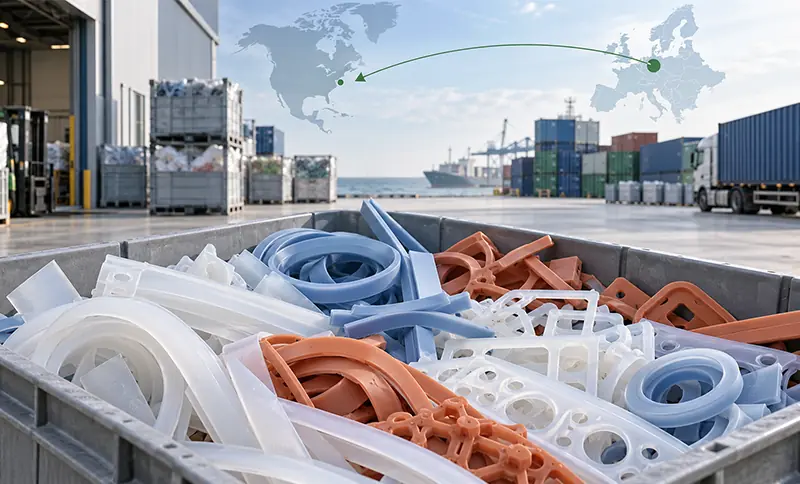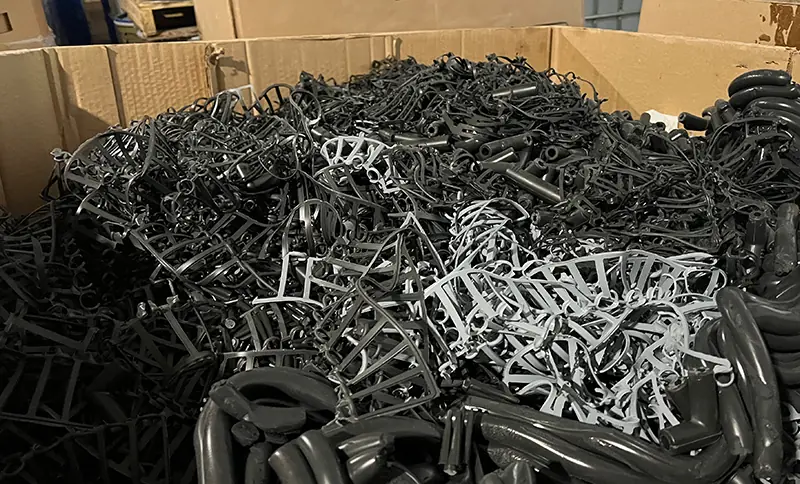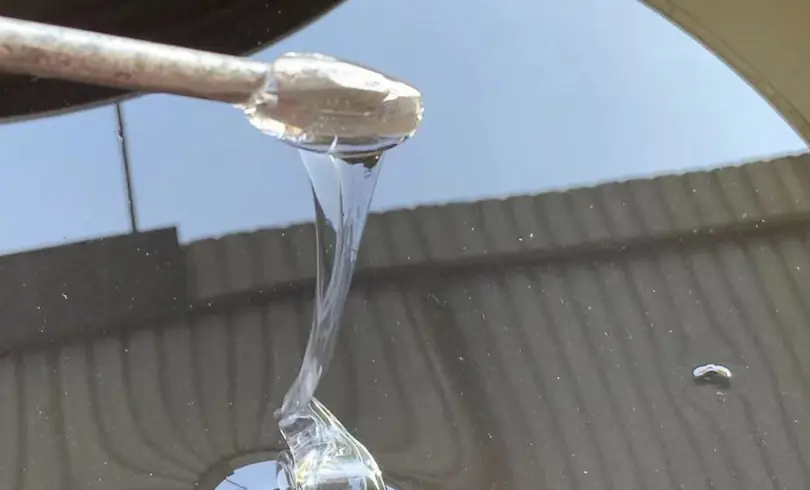
Cured silicone rubber and uncured silicone compounds require different handling, but both can be candidates for specialized industrial recycling. ECO USA assesses production scrap, surplus compounds and expired liquid silicone rubber (LSR) for processing into recycled silicone oil.
Cured and uncured silicone rubber
Silicone rubber is based on polymers with a silicon–oxygen backbone. Its properties depend on the polymer structure, curing system, fillers and other ingredients.
Before curing, a silicone compound can be a flowable liquid, paste or high-consistency material. Curing creates a crosslinked network that gives the finished rubber its elastic form. Material identification is important because a cured part and an uncured compound can have different storage and processing requirements.
Cured production scrap
Examples include molding runners, flash, sheet trimmings, punch-out scrap and rejected parts. Separate silicone from other rubbers, plastics and metal wherever possible, and identify coatings or other materials attached to the scrap.
Uncured compounds and surplus stock
Uncured streams may include unused components, off-specification batches and material left in drums or liners. Provide the product grade, curing system and available safety or technical data sheets when requesting a recycling assessment.
How liquid silicone rubber is processed
LSR is commonly a two-component, platinum-cured system. In a typical formulation, one component contains the catalyst and the other contains the crosslinker. Processing equipment meters and mixes the components before molding. The required ratio and processing conditions depend on the product specification.
Liquid injection molding
In liquid injection molding, the mixed material enters a heated mold and cures into a solid component. This differs from thermoplastic processing: cured silicone rubber is a thermoset and is not simply melted and remolded in the same way as a thermoplastic.
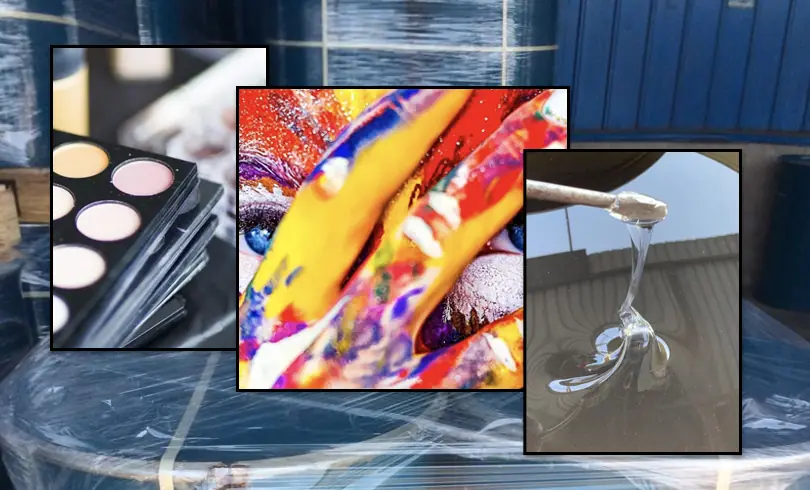
Manufacturers use LSR for seals, gaskets, electrical components and selected medical or food-contact parts. However, suitability depends on the grade, processing conditions and applicable requirements. Check these details for each silicone formulation.
Fillers, additives and curing conditions
Silica and other ingredients influence flow, strength, hardness and other material properties. Pigments, reinforcing fillers and additional components can also affect a scrap stream’s compatibility with a recycling process.
Follow the compound manufacturer’s instructions for mixing, molding and any post-curing operation. There is no single curing temperature or cycle that applies to every LSR grade.
Recycling cured silicone and LSR
Recovering silicone from cured rubber requires a specialized process. At ECO USA, we chemically process, filter and polymerize suitable silicone feedstock to manufacture recycled polydimethylsiloxane (PDMS) silicone oil.
Acceptance depends on silicone content, fillers, contamination, quantity and the condition of the material. A product being described as silicone does not mean that every mixed or heavily filled stream can be processed economically.
Learn more about our silicone recycling process and the silicone rubber scrap we collect.
Prepare material information for our team
When you contact ECO USA, include:
- Whether the material is cured, uncured or a mixture.
- The product name, curing system and available SDS or TDS.
- Photos showing the scrap and its packaging.
- The estimated quantity, collection location and frequency of supply.
- Any known contamination or non-silicone components.